Creating a Home Coffee Log: Why and How to Track Your Shots
```html
Your Memory Is Lying. Your Coffee Log Tells the Truth.
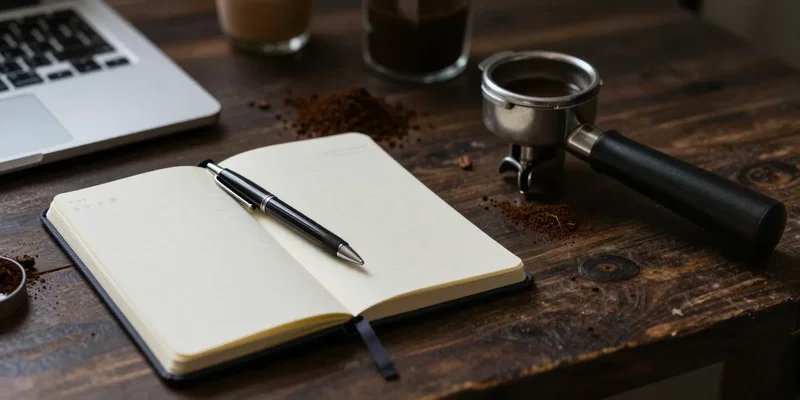
Ever have that perfect shot? The one that makes you close your eyes and just… savor it. You promise yourself you’ll remember exactly what you did. Then tomorrow comes. You try to recreate it. And it’s just… off. Was it 17 grams or 18? Did you grind a touch finer? Your brain is a terrible data storage device for this stuff. We romanticize. We forget. That’s where a coffee log comes in. It’s not a diary for your feelings. It's a cold, hard fact-checker for your process. And it’s the single fastest way to stop guessing and start knowing.
The Holy Trinity of Data: Dose, Yield, Time.
Forget the fluff. Start with the three numbers that actually matter. This is your baseline, your espresso ABCs. Dose: How much coffee you put in the basket (e.g., 18.5g). Yield: How much liquid espresso you get in the cup (e.g., 40g). Time: How long the shot takes to pull (e.g., 29 seconds). Write these down. Every. Single. Time. This trio controls everything—strength, body, sourness, bitterness. Getting them consistent is 80% of the battle. The other 20% is tweaking one of these to fix a problem.
What to Scribble Beyond the Numbers
Okay, you got your numbers. But you need context. Otherwise, it's just a spreadsheet. Jot down the coffee bean (name, roast date). Your grinder setting (this is huge). Now, the most important part: Taste Notes. Was it sour? Bitter? Syrupy? Watery? Write that junk down. "Bright but sharp." "Chocolatey but short finish." "Kinda ashy." Be brutally honest. This is the "why" behind changing the numbers tomorrow. Finally, a "Next Action" note. One small change. "Try 18.0g dose." "Grind one click finer." This turns logging from record-keeping into a direct plan of attack.
Your Toolbox: From Paper to Pixels
Use whatever you'll actually use. Seriously. A dedicated notebook by the machine works because it’s frictionless. A note on your phone works because it’s always there. Some people use a spreadsheet because they love graphs (weird, but effective). There are even apps built for this. It doesn’t matter. The fanciest system you abandon is useless. The crumpled notepad you actually write in is a masterpiece. Start simple. Pen and paper is a powerful combo. You can always geek out with tech later.
Actually Using the Data (The Fun Part)
Here’s where the magic happens. You had a sour, harsh shot yesterday. You look at your log. Dose: 18g, Yield: 45g in 22 seconds. Ah. The yield is too high for the dose, and the time is too fast. The coffee was under-extracted. Today, you grind finer to slow it down, aiming for a 30-second pull for that same 45g yield. You taste it. Better? Log it. Compare. This isn't random tweaking. It's informed experimentation. You’re not just making coffee; you’re running a tiny, delicious science lab on your countertop. Every bad shot teaches you something. Every good shot becomes a recipe you can actually repeat.
Stop Solo Brewing. Share Your Log.
This is the "Community" part. Hit a wall? Can’t fix that bitter note? Take a picture of your log page and post it in your favorite coffee group. "Hey, using these beans, my last three shots tasted ashy. Here's my data. Any ideas?" It transforms the conversation. Instead of "how do I make it less bitter?" you’re asking "with *these specific parameters*, what should I change?" You’ll get better advice. Faster. You’re speaking the language. And you’re contributing. Maybe your log entry solves someone else’s mystery next week. ```